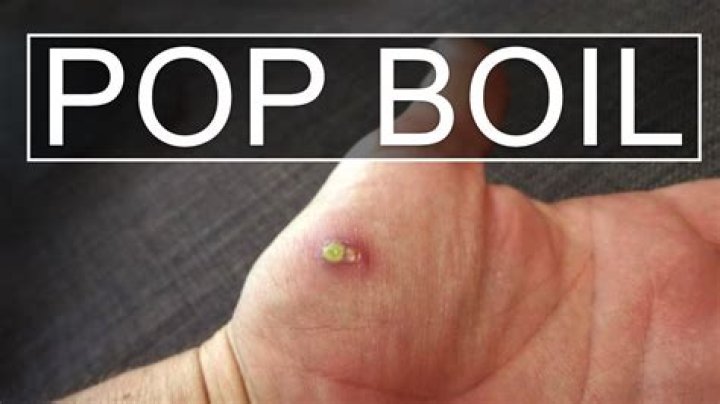
According to a 2018 article , a person should never attempt to pop a boil themselves. Popping or squeezing a boil can allow bacteria to infect deeper layers of the skin, as well as other tissues and organs. This can lead to serious, life-threatening complications. Boils can heal on their own without medical treatment.
How do I get rid of a boil quickly?
The first thing you should do to help get rid of boils is apply a warm compress. Soak a washcloth in warm water and then press it gently against the boil for about 10 minutes. You can repeat this several times throughout the day. Just like with a warm compress, using a heating pad can help the boil start to drain.How do you get a boil to pop?
Apply warm compresses and soak the boil in warm water. This will decrease the pain and help draw the pus to the surface. Once the boil comes to a head, it will burst with repeated soakings.Should I pop and drain a boil?
Treatment generally entails keeping the area clean, and applying warm compresses to encourage pus to drain from the core. A person should never try to squeeze or burst a boil, as this can cause the infection to spread to other areas of the body. It may also result in scarring.Can you squeeze a boil out?
Don't pick at, squeeze, or try to open a boil in any way. You may force the skin infection deeper and cause complications.What happens if you pop a boil?
How long do boils last?
Boils may take from 1 to 3 weeks to heal. In most cases, a boil will not heal until it opens and drains. This can take up to a week. A carbuncle often requires treatment by your healthcare provider.When should you pop a boil?
As long as the boil is small and firm, opening the area and draining the boil is not helpful, even if the area is painful. However, once the boil becomes soft or "forms a head" (that is, a small pustule is noted in the boil), it can be ready to drain. Once drained, pain relief can be dramatic.What is your body lacking when you get boils?
Zinc is an important mineral for boosting immunity and is essential in the treatment of boils. Along with zinc, foods containing vitamin A (fish and dairy products), vitamin C (fruits and vegetables) and vitamin E (nuts and seeds) are helpful in strengthening the immune system.Why do people get boils?
Most boils are caused by Staphylococcus aureus, a type of bacterium commonly found on the skin and inside the nose. A bump forms as pus collects under the skin. Boils sometimes develop at sites where the skin has been broken by a small injury or an insect bite, which gives the bacteria easy entry.What does a vaginal boil look like?
What does a vaginal boil look like? The boil may start as a small, red bump. It can develop into a swollen, painful spot with a white or yellow pus-filled tip. This happens quickly — sometimes over a few days.How do you pop a boil without a head at home?
You can, however, try these safe home treatments:
- Put a warm, wet cloth on your boil for about 20 minutes, three or four times a day. ...
- If the boil opens, gently wash the area and dress it with a sterile bandage. ...
- For the next few days, continue using the warm cloths to promote draining in the open wound.
How do I know if its a boil or a cyst?
Boils and cysts can both look like bumps on your skin. The main difference between a cyst and a boil is that a boil is a bacterial or fungal infection. Most cysts are slow-growing and benign (noncancerous), and they aren't contagious. Boils, on the other hand, can spread bacteria or fungi on contact.Do boils go away on their own?
A boil is a hard and painful lump that fills with pus. Most boils go away on their own.What kills a boil?
The primary home remedy for most boils is heat application, usually with hot or warm water soaks or warm compresses. It may be necessary to apply them 20 minutes at a time for three to four times daily.What is the fastest way to bring a boil to a head?
Use a clean, warm cloth to apply a compress to the boil. You can repeat this several times a day to encourage the boil to come to a head and drain. Keep the area clean.Do boils bleed?
Symptoms for a boil may include: A warm, painful lump in the skin. Pus in the center of the lump. Whitish, bloody fluid leaking from the boil.What is a boil filled with blood?
What Is a Boil? A boil is a common, painful infection of a hair follicle and the surrounding skin. It begins as a red lump, then fills with pus as white blood cells rush in to fight the infection. Good home care can often clear up a single boil, also known as a skin abscess.Does rubbing alcohol help boils?
Keeping the boil cleanExperts also recommend: using antiseptic or antibacterial soap daily for 1 week, then twice weekly for several weeks. using 70% isopropyl alcohol diluted in water daily for 1 week after the boil forms.
Can you get boils from sitting too much?
Prolonged sitting, extreme sweating, and skin irritation may make you prone to boils on the buttocks. Boils are the most common on the face, neck, buttocks, thighs, and armpits.Why do I get boils on my butt?
Causes and risk factorsBacterial infections are the most common cause of boils on the buttocks. Staphylococcus aureus is usually the bacterium responsible for the boils. This bacterium often lives on the skin or inside the nose. Skin folds are a common site for boils.