Cluster A personality disorders
They include paranoid personality disorder, schizoid personality disorder and schizotypal personality disorder.Why are there 3 clusters of personality disorders?
In the years since, the understanding of personality disorders has evolved to include 10 different conditions. While each personality disorder has different symptoms and traits, professionals sort them into three clusters: A, B, and C. The disorders within each cluster share important characteristics.What are the 3 types of personality disorders?
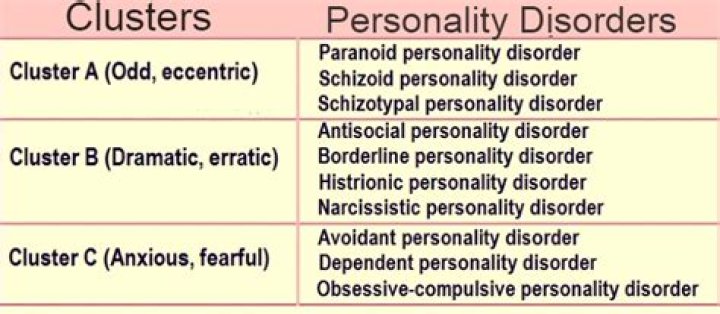
Personality disorders are grouped into 3 clusters: A, B and C.
- Cluster A personality disorders.
- Cluster B personality disorders.
- Cluster C personality disorders.
What is the difference between cluster AB and C personality disorders?
Cluster A disorders are defined by “odd” thinking and behaviors like paranoia or a lack of emotional responses. Cluster C disorders are defined by anxious thoughts and behavior. Cluster B. Cluster B disorders involve unpredictable, dramatic, or intensely emotional responses to things.Can you have 3 personality disorders?
Technically, according to DSM-5*, a person can receive more than one personality disorder diagnosis. People who are diagnosed with a personality disorder most often qualify for more than one diagnosis. A person with a severe personality disorder might meet the criteria for four, five or even more disorders!Cluster A B C Personality Disorders
What is cluster A?
Cluster A is called the odd, eccentric cluster. It includes Paranoid Personality Disorder, Schizoid Personality Disorder, and Schizotypal Personality Disorders. The common features of the personality disorders in this cluster are social awkwardness and social withdrawal.What are the cluster C personality disorders?
Cluster C personality disorders are characterized by anxious, fearful thinking or behavior. They include avoidant personality disorder, dependent personality disorder and obsessive-compulsive personality disorder.What cluster is narcissistic personality?
Cluster B disorders are marked by inappropriate, volatile emotionality and often unpredictable behavior. The disorders in Cluster B are antisocial personality disorder, borderline personality disorder, histrionic personality disorder, and narcissistic personality disorder.What personality disorders are similar to narcissism?
Narcissistic personality (NPD) and histrionic personality (HPD) are both cluster B personality disorders.What is the most common personality disorder?
According to a major study, the most prevalent personality disorder is obsessive-compulsive personality disorder. The second most common is narcissistic personality disorder, followed by borderline personality disorder.What are the 4 clusters of personality disorders?
There are four types of cluster B personality disorders, each with a different set of diagnostic criteria and treatments:
- antisocial personality disorder.
- borderline personality disorder.
- histrionic personality disorder.
- narcissistic personality disorder.
What are the types of personality disorders?
Currently psychiatrists tend to use a system of diagnosis which identifies ten types of personality disorder. These are grouped into three categories. Suspicious: Paranoid personality disorder.
...
- Avoidant personality disorder.
- Dependent personality disorder.
- Obsessive compulsive personality disorder (OCPD)
What does each cluster of personality disorder focus on?
Personality disorders are characterized by unhealthy thoughts and actions, which interrupt one's day to day living. These disorders can be further divided into three clusters: A, the odd and eccentric; B, the dramatic or erratic; and C, the anxious or fearful.Are NPD and BPD similar?
Similarities Between NPD and BPDPeople with BPD look to others to manage their moods, while people with NPD want others to prop up their self-esteem. Both live in alternative realities in which feelings create facts. Both project their feelings of badness on to other people, who become the target of blame.
What cluster is bipolar?
Conclusions: Cluster B personality disorders are prevalent comorbid conditions identifiable in a substantial number of individuals with bipolar disorder, making an independent contribution to increased lifetime suicide risk.What are the three main categories of personality disorders in the DSM 5?
The DSM-5 groups personality disorders into three broad clusters that it refers to as A, B, and C.
...
Cluster C personality disorders
- avoidant personality disorder.
- dependent personality disorder.
- obsessive-compulsive personality disorders.