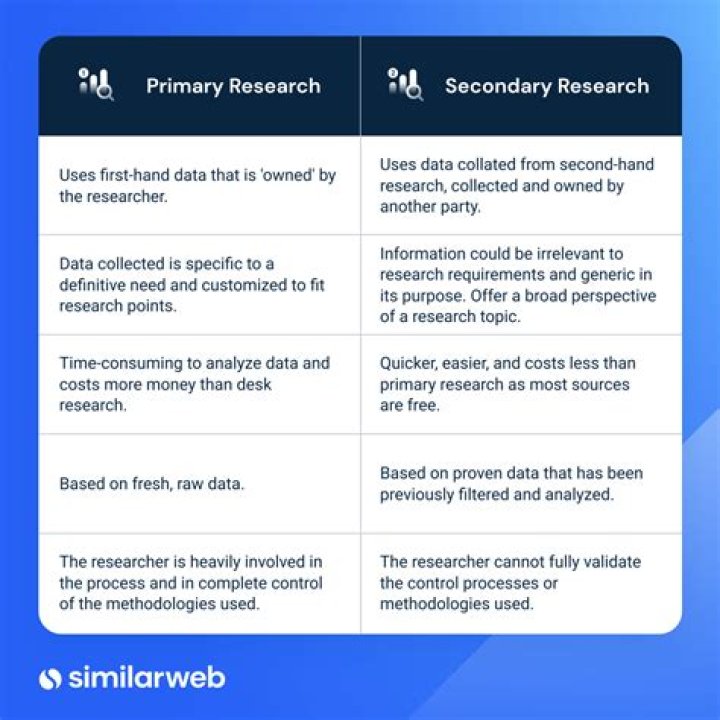
Secondary quantitative research is also known as desk research. In this research method, researchers use the already existing data also known as secondary data. This existing data is then summarized and arranged to increase the overall efficacy of the research.
What type of research is secondary research?
Secondary research is a type of research that has already been compiled, gathered, organized and published by others. It includes reports and studies by government agencies, trade associations or other businesses in your industry.What type of research uses secondary data explain with example?
Sources of secondary data include books, personal sources, journals, newspapers, websitess, government records etc. Secondary data are known to be readily available compared to that of primary data. It requires very little research and needs for manpower to use these sources.Is secondary data used in quantitative research?
Secondary quantitative research methodsSecondary quantitative research or desk research is a research method that involves using already existing data or secondary data. Existing data is summarized and collated to increase the overall effectiveness of research.
What uses secondary data?
Secondary data is used to increase the sampling size of research studies and is also chosen for the efficiency and speed that comes with using an already existing resource. Secondary data facilitates large research projects, in which many research groups working in tandem collect secondary data.5.1 Using Secondary Data In Your Research
When should researcher use secondary data?
Secondary data analysis involves a researcher using the information that someone else has gathered for his or her own purposes. Researchers leverage secondary data analysis in an attempt to answer a new research question, or to examine an alternative perspective on the original question of a previous study.Why secondary data is used in research?
The advantages of using secondary data are: The fact that much information exists in documented form – whether deliberately processed or not – means that such information cannot be ignored by the researcher, and generally saves time and effort collecting data which would otherwise have to be collected directly.Can qualitative research use secondary data?
Secondary analysis of qualitative data is the use of existing data to find answers to research questions that differ from the questions asked in the original research (Hinds et al., 1997).Is secondary data analysis qualitative or quantitative?
Most SDAs use quantitative data, but some qualitative studies lend themselves to SDA. The researcher must have access to source data, as opposed to secondary source data (e.g., a medical record review).What is qualitative research study?
Qualitative research can be defined as the study of the nature of phenomena and is especially appropriate for answering questions of why something is (not) observed, assessing complex multi-component interventions, and focussing on intervention improvement.What is commonly used in qualitative research?
These are some of the most common qualitative methods:
- Observations: recording what you have seen, heard, or encountered in detailed field notes.
- Interviews: personally asking people questions in one-on-one conversations.
- Focus groups: asking questions and generating discussion among a group of people.
What is quantitative research method?
Definition. Quantitative methods emphasize objective measurements and the statistical, mathematical, or numerical analysis of data collected through polls, questionnaires, and surveys, or by manipulating pre-existing statistical data using computational techniques.How do you research secondary data?
Various Methods Of Collecting Secondary Data
- Collecting Information Available On The Internet. ...
- Collecting Data Available In Government And Non-Government Agencies. ...
- Accessing Public Libraries. ...
- Using Data From Educational Institutions. ...
- Using Sources Of Commercial Information.